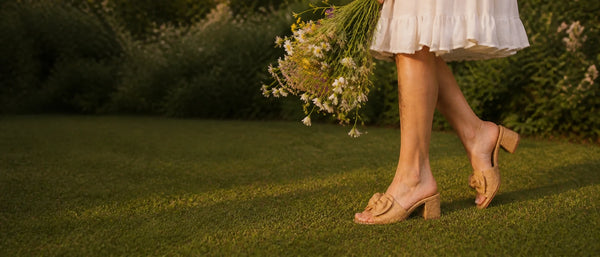


The choice between a block heel and a stiletto is usually framed as comfort versus elegance. That is too simple. The two shapes behave differently underfoot, and the right answer depends on how long you will be standing, what you will be standing on, and how the rest of the shoe is built.
What actually differs
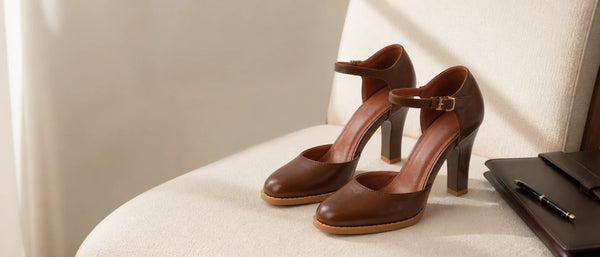
- Contact area. A block heel spreads your weight over a wider base. A stiletto concentrates it into a small point. That single difference drives most of what follows.
- Stability on uneven ground. Cobblestones, grass, grating and gaps in decking are where thin heels get caught. A block heel is the practical choice for outdoor events.
- Forward pressure. Both shapes push weight onto the ball of the foot as height increases. A block heel does not remove that pressure — it only improves lateral stability. A lower stiletto can be more comfortable than a very high block heel.
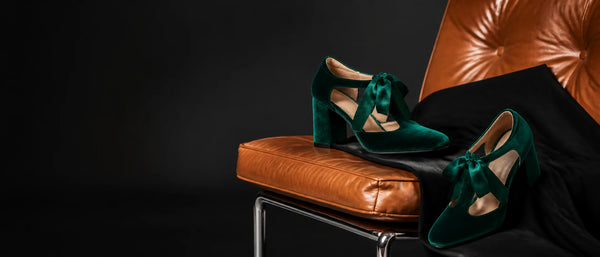
- Line. A stiletto elongates the leg more visibly. A block heel reads more grounded and more casual, which can be exactly what an outfit needs.
Height matters more than shape
If you are choosing between a 3-inch block and a 2-inch stiletto for a long day, the lower shoe will usually win regardless of heel type. Decide the height you can sustain first, then pick the shape.
Which to choose, by occasion
- Full working day, commuting on foot. Block heel, moderate height. Browse block heels.
- Dinner, seated most of the evening. A stiletto is comfortable here because you are off your feet for most of it.
- Outdoor wedding or garden event. Block heel, or a wedge if the ground is soft.
- Office where you move between rooms. A closed pointed shape on a moderate heel. See pumps and heels and the office edit.
What each height range feels like
Heel height is described in inches, but what you feel is the angle. As a rough guide:
- Under 2 inches. Barely changes your walking pattern. Sustainable for a full day in either shape.
- 2 to 3 inches. The range where heel shape starts to matter. A block heel here is still walkable for hours; a stiletto is comfortable for an evening but tiring across a working day.
- Over 3 inches. Weight sits noticeably forward. A platform under the toe is what makes these wearable — without one, the effective pitch is steep regardless of heel shape.
This is why comparing two shoes by their stated heel height alone can mislead you. Check whether there is a platform, and by how much.
How wide is the heel, really?
Stability comes from the base of the heel, and the two shapes are far apart. A typical block heel meets the ground with a base of roughly an inch (2–3 cm) across; a stiletto tip is usually well under half an inch (about 1 cm). The same body weight lands on several times less area, which is why a stiletto sinks into grass and feels unsteady when you turn.
Two more things are worth a look on any heel. First, where the heel sits: a heel set directly under the centre of your own heel feels steady, while one pushed far back feels tippy. Second, the top piece, the small replaceable tip at the bottom: a rubber tip grips smooth floors much better than hard plastic, and worn tips are cheap to replace at any shoe repair shop.
Many podiatrists suggest keeping everyday heels to around 2 inches. Above roughly 3 inches, pressure on the ball of the foot climbs quickly, so save the tallest pairs for shorter wear.
Test a new pair properly in the first ten minutes
Before you commit to wearing a heel out, do this at home on carpet:
- Stand still for a minute. If your toes are already sliding forward and bunching, the size or the strap placement is wrong — that does not improve with wear.
- Walk a short distance and turn. Turning is where lateral stability shows up. A heel that feels fine in a straight line can feel unstable on a pivot.
- Check your heel lift. A small amount of slip at the back is normal in a new shoe. More than about a finger's width usually means the shoe is too large, not that it needs breaking in.
Returns are open for 30 days on unworn items in their original box, so an indoor test costs you nothing — the conditions are on our shipping and returns page.
What else affects how a heel feels
Heel shape is only one variable. Toe box shape decides how much room your toes have as weight moves forward; strap placement decides whether the foot slides; and the upper material decides whether the shoe softens with wear or holds its structure. We go through how we assess these in the Comfort Lab.
Start here
The full heeled range sits under heels, with warm-weather options in heeled sandals.